Your Quick Guide
Let's cut right to the chase. You're here because you or someone you know is a talented athlete, and the idea of getting college paid for by playing a sport sounds pretty darn good. I get it. I've been through the recruiting circus myself, and I've talked to hundreds of families navigating this maze. The dream is real, but the process? It's complicated, filled with myths, and honestly, a bit of a grind.
Most articles make it sound like a straight shot: be great, get seen, get a full ride. If only it were that simple. The reality involves governing bodies with rulebooks thicker than your thigh, coaches playing a long game, and timelines that start way earlier than most people think.
This guide isn't about selling you a dream. It's about giving you the map to navigate the real world of athletic scholarships.
Quick Reality Check: According to the NCAA's own data, only about 2% of high school athletes are awarded athletic scholarships at NCAA schools. That doesn't mean you can't get one, but it does mean you need a smart, strategic approach.
What Exactly IS an Athletic Scholarship?
First, let's define our terms because there's a lot of confusion. An athletic scholarship is financial aid awarded by a college or university to a student primarily based on their athletic ability and potential contribution to a sports team. The key word there is primarily. It's not an academic grant, though your grades still matter immensely.
These scholarships are offered by the institution's athletic department, and the coach is usually the one who decides who gets them and how much. The money can cover tuition, fees, room, board, and required course-related books. It's a contract, essentially. They pay for school, and you agree to participate in the sport, maintain certain standards, and follow the team rules.
One huge misconception? The "full ride." People throw that term around like candy. The truth is, a full athletic scholarship that covers absolutely everything is relatively rare and mostly exists in what the NCAA calls "head count" sports at the Division I level (we'll get to divisions in a second).
Many, many athletic scholarships are partial. A coach might offer you a 50% scholarship for your first year. That's the norm in a lot of sports. It's not a failure on your part; it's just how the system is structured to spread resources across a roster.
The Major Governing Bodies: NCAA, NAIA, and NJCAA
You can't talk about athletic scholarships without understanding who makes the rules. Think of these as the different leagues with their own playbooks.
The NCAA (National Collegiate Athletic Association) is the big one, the 800-pound gorilla. It's split into three divisions: I, II, and III. This is a critical distinction.
- NCAA Division I: The most visible, highest level of competition. Schools are generally larger with bigger athletic budgets. DI schools offer athletic scholarships. Sports are categorized as "head count" (full scholarships only, like football, basketball, women's volleyball, tennis, and gymnastics) or "equivalency" (scholarships can be divided into partial awards, like baseball, soccer, track & field).
- NCAA Division II: A balance of athletics and academics. Schools are often mid-sized. DII schools also offer athletic scholarships, but typically at lower amounts than DI. Almost all sports here are "equivalency" sports.
- NCAA Division III: DIII schools do not offer athletic scholarships. Let me repeat that, because it's the single biggest point of confusion. You cannot get an athletic scholarship to play sports at a DIII school. However, they often have strong academic and need-based financial aid packages, and many talented athletes choose DIII for the balance it offers. You're still recruited by coaches to play on their teams.
Don't Skip This: If a DIII coach is "recruiting" you but starts talking about an "athletic scholarship," that's a massive red flag. They either don't know their own rules (unlikely) or are misleading you. Run the other way.
The NAIA (National Association of Intercollegiate Athletics) is like the NCAA's smaller cousin, but don't underestimate it. It has over 250 member schools, many of which are private. The NAIA offers athletic scholarships, and their rules can be slightly more flexible than the NCAA's. For many athletes, the NAIA is a fantastic option with a great level of play and significant scholarship opportunities. You can check a school's affiliation on the official NAIA website.
The NJCAA (National Junior College Athletic Association) governs two-year community and junior colleges. This is a path a lot of people overlook. Junior colleges (JUCOs) can offer athletic scholarships and are often a brilliant stepping stone. An athlete might go to a JUCO to develop physically, improve their grades to meet NCAA eligibility, get more playing time on film, and then transfer to a four-year school with a scholarship. It's a strategic move, not a consolation prize.
Here’s a quick comparison to keep it straight:
| Governing Body | Scholarships Offered? | Best For Athletes Who... | Level of Play |
|---|---|---|---|
| NCAA Division I | Yes | Are elite, national-level competitors seeking the highest visibility. | Very High |
| NCAA Division II | Yes (often partial) | Want a strong athletic experience with more balance and regional focus. | High |
| NCAA Division III | No (but other aid exists) | Prioritize academics and campus life alongside competitive sports. | Moderate to High |
| NAIA | Yes | Want scholarship opportunities at often smaller, private schools with flexible rules. | Moderate to High |
| NJCAA (JUCO) | Yes | Need to develop, improve grades, or seek a 2-year path to a 4-year school. | Varies Widely |
Which Sports Offer the Most Athletic Scholarships?
Not all sports are created equal in the scholarship world. The number of scholarships a team can give is controlled by the governing bodies. This creates a "scholarship market" for each sport.
Football and basketball are the famous ones, but the landscape is much broader. Women's sports, thanks to Title IX (the federal law requiring gender equity), often have a significant number of scholarships available. In fact, some of the best opportunities for female athletes are in sports like volleyball, soccer, lacrosse, and softball where there are many full and partial scholarships to go around.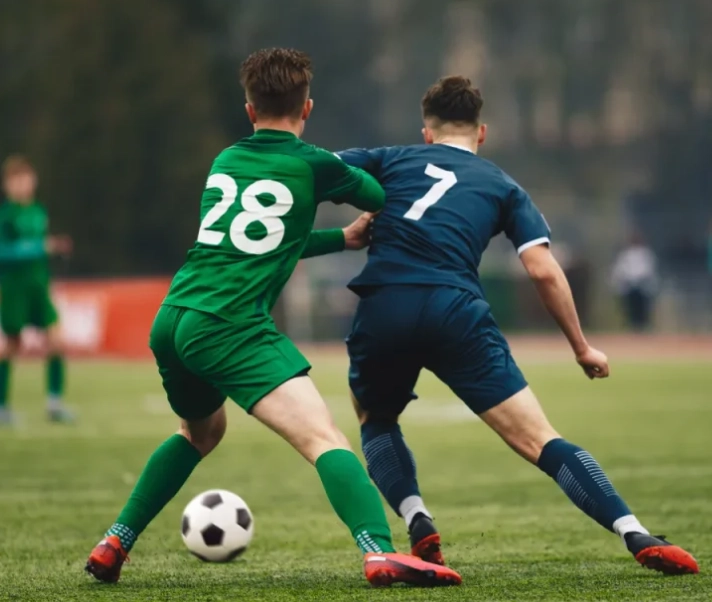
Here’s a rough, unofficial ranking of sports with plentiful scholarship opportunities (considering both the number of scholarships per team and the number of schools that sponsor the sport):
- Football (NCAA DI FBS): Up to 85 full scholarships per team. The numbers are huge, but so is the competition.
- Basketball (Men's & Women's DI): Up to 13 full scholarships for men, 15 for women. Highly competitive.
- Women's Volleyball (DI): Up to 12 full scholarships. A major sport with tons of programs.
- Women's Soccer (DI): Up to 14 full scholarships. Massive growth in participation and scholarships.
- Baseball (DI): Up to 11.7 equivalency scholarships. Rarely full rides; mostly partial awards spread across large rosters.
- Softball (DI): Up to 12 full scholarships. Similar structure to baseball but often with more full scholarships given.
- Track & Field/Cross Country (DI): Up to 12.6 scholarships for men, 18 for women. Often split among many athletes.
- Women's Lacrosse (DI): Up to 12 full scholarships. A fast-growing sport with increasing opportunities.
- Tennis (Men's & Women's DI): Up to 4.5 scholarships for men, 8 for women. Usually partial awards.
- Swimming & Diving (DI): Up to 9.9 for men, 14 for women. Another classic equivalency sport.
Don't see your sport here? Don't panic. Golf, wrestling, gymnastics, rowing, water polo, hockey... the list goes on. Every NCAA DI and DII sport has a scholarship limit. The key is to research your specific sport. A great resource is the NCAA Eligibility Center's site, which outlines the rules for each sport and division.
Pro Tip: For "equivalency" sports (like baseball, soccer, track), being a versatile player can make you more valuable. A pitcher who can also hit, or a soccer midfielder who can play defense, might be more likely to earn a larger piece of that scholarship pie than a one-dimensional specialist.
The Step-by-Step Game Plan: From High School to Signed Offer
Okay, so how do you actually get one of these things? It's a marathon, not a sprint. Starting early is non-negotiable. Here’s a realistic timeline.
Freshman & Sophomore Year of High School: The Foundation
This is about building your profile, not blasting emails to every college coach in America.
Academics First, Seriously. I can't stress this enough. Your GPA and the core courses you take are the foundation of your eligibility. The NCAA, NAIA, and NJCAA all have specific academic requirements. If you don't meet them, no amount of athletic talent will get you an NCAA scholarship. Start strong and keep your grades up. Use the NCAA Eligibility Center course planning tool early.
Skill Development. Focus on getting better at your sport. Play for your high school team, but also consider club or travel teams that offer higher competition and more exposure. This is where you get the game film that will later become your highlight reel.
Initial Research. Start casually looking at colleges. What size school do you like? What part of the country? What might you want to study? Make a giant list of 50+ schools that interest you, regardless of their athletic division. This list will get refined later.
Junior Year: The Recruitment Engine Starts
This is the most critical year. For many sports, this is when coaches start seriously evaluating prospects.
Create a Recruiting Profile. Don't overcomplicate it. You need a simple, clean athletic resume (PDF format) with your stats, GPA, test scores (if available), jersey number, position, and contact info for you and your club/high school coach. A link to a well-edited, 3-4 minute highlight video is gold. Put it on YouTube (unlisted is fine) and link it in your resume.
Initiate Contact. Now you can start reaching out. Email the coaches at the schools on your list. Keep it professional but personal. "Dear Coach Smith, I am a junior goalkeeper from XYZ High School... I have been following your program and am impressed by... My highlight video is here: [link]. My full athletic and academic resume is attached." Send updates after big tournaments or when you have new stats/grades.
Campus Visits. Take unofficial visits. These are visits you pay for yourself. Email the coach ahead of time to see if they can spare 20-30 minutes to meet with you while you're on campus. See the facilities, get a feel for the campus. It's invaluable.
Register with the Eligibility Centers. For NCAA or NAIA schools, you need to create an account with their respective eligibility centers. Do this early in your junior year. The NCAA Eligibility Center and the NAIA Eligibility Center are where your academic credentials will be certified.
The most common mistake? Waiting for the coach to find you. You have to market yourself. Be proactive, but be respectful of their time.
Senior Year: The Home Stretch and Decision Time
This is when offers (hopefully) start to materialize and decisions get made.
Official Visits. If a coach is seriously interested, they will invite you on an official visit. The school pays for this (transportation, meals, lodging). You'll get the full red-carpet treatment. This is your chance to see the team dynamics, spend time with players, and ask hard questions.
The National Letter of Intent (NLI). This is the big signing day you see on TV. Signing an NLI is a binding agreement. You agree to attend that school for one academic year, and they agree to provide you with athletic aid for that year. Do not sign it until you are 1000% sure, and you understand exactly what the scholarship offer entails. Is it a one-year offer renewable annually? Is it a four-year guaranteed offer (increasingly rare)? What are the conditions for renewal (e.g., maintain a certain GPA, stay on the team)? Get everything in writing from the coach or athletic department before you sign.
Negotiation? It's not common, but it's not impossible. If you have a legitimate offer from another comparable school, you can respectfully mention it. "Coach, I am thrilled by your offer of a 25% scholarship. I also have an offer from University B for 40%. Your program is my top choice. Is there any flexibility in the aid package?" This works better in equivalency sports and at the DII/NAIA level than in DI head-count sports. Tread carefully—you don't want to come across as arrogant.
Brutally Honest FAQs (Questions I Wished I'd Asked)
Can my athletic scholarship be taken away?
Yes, it can, and this is the scary part most people don't talk about. For non-guaranteed multi-year scholarships (which are still common), the scholarship is a one-year agreement. A coach can choose not to renew it for the next year. Common reasons include: not meeting athletic performance expectations, violating team rules, suffering a career-ending injury (though schools often honor the scholarship in this case), or failing academically. Always, always ask about the renewal policy.
What's better: a small partial scholarship at a big DI school or a full ride at a smaller DII or NAIA school?
There's no right answer, only what's right for you. You have to do the math. A 25% scholarship at a $60,000 per year private school still leaves you with $45,000 to pay. A 100% scholarship at a $30,000 school covers everything. Which school is a better fit academically and socially? Where will you actually get to play? Being a benchwarmer at a famous DI school for four years can be a miserable experience. Playing immediately and being a star at a DII school can be incredible. I've seen athletes make both choices and be happy. I've also seen them make both and regret it. Visit the campuses.
Do I need to hire a recruiting service?
My personal opinion? Most are overpriced and overpromise. They can't get you a scholarship; only your talent and academics can. They might help with profile creation and email lists, which you can absolutely do yourself with some effort. The one exception might be for sports with highly fragmented recruiting landscapes. But for most mainstream sports, save your money. The best service is a proactive, organized athlete and family.
What if I'm not a DI-level athlete?
Welcome to the vast majority of college athletes! This is where DII, NAIA, and NJCAA shine. The competition is still fantastic, the experiences are life-changing, and the scholarship money is very real. Some of the best athletic and academic experiences happen outside the DI spotlight. Don't get blinded by the division. Focus on finding a school where you can contribute, get a great education, and graduate with minimal debt.
The Final Whistle
Pursuing athletic scholarships is a journey that tests your organization, your patience, and sometimes your ego. It requires you to be a student first and an athlete second, even when the sports part is so much more fun.
The goal shouldn't just be "getting a scholarship." The goal should be finding the right college fit—a place where you can thrive in the classroom, contribute on the field or court, and build a foundation for your life after sports. The financial aid is a huge, wonderful part of that equation, but it's not the only part.
Start early. Keep your grades up. Be proactive in your communication. Ask tough questions. And remember, there are thousands of colleges and countless athletic scholarship opportunities out there. Your job is to find the one that's meant for you.
Now go put in the work.
Leave a Comment