Quick Navigation
- Why Bother? The Real Value Behind Office Hours
- How to Prepare: Don't Just Show Up
- The Art of the Conversation: What to Actually Say
- Navigating the Awkward & What NOT to Do
- The Follow-Up: Making It Last
- Beyond the Basics: Advanced Office Hours Moves
- Common Questions & Concerns (The FAQ You Actually Need)
- Putting It All Together: Your Action Plan
Let's be honest. The words "professor office hours" can send a shiver down the spine of even the most confident student. You picture a stern professor behind a giant desk, stacks of unmarked papers, and that awkward silence after you knock on the door. I used to think that way too. I'd walk past my professor's door a dozen times, my question written on a notecard, only to chicken out and go look it up online (usually finding a worse answer).
What a waste.
It took me until my junior year to realize that office hours weren't a test or an interrogation. They were arguably the most valuable, underutilized resource on campus. This isn't just about clarifying a homework problem—though that's a great reason to go. It's about building a connection that can transform your academic experience, provide mentorship, and even open doors to research opportunities or glowing recommendation letters later.
So, let's strip away the mystery and the anxiety. This guide is everything I wish someone had told me as a freshman. We'll walk through the why, the how, and the what-to-say, turning those daunting professor office hours into a routine part of your success strategy.
Why Bother? The Real Value Behind Office Hours
Everyone tells you to go, but rarely do they explain why it's such a game-changer. It's more than just getting a better grade on the next quiz.
Think of it this way: Your professor's office is the control room for the course. The syllabus is the public manual, but in their office, you get the insider's commentary, the context behind the concepts, and a chance to connect the dots in a way that lectures alone can't provide.
First, there's the obvious academic benefit. You get one-on-one tutoring from the person who wrote the exam. They can explain a tricky concept in three different ways until it clicks, something impossible in a 200-person lecture. Struggling with the thesis for your paper? A five-minute chat during their office hours can save you five hours of misguided writing.
But the deeper value is relational. In a massive university, it's easy to feel like just a student ID number. Showing up to office hours is the single best way to become a person to your professor. They see you're engaged, curious, and proactive. This impression matters. A lot.
When it comes time for that borderline grade at the end of the semester, a professor is far more likely to round up a student they know and have seen putting in extra effort. When you need a recommendation letter for an internship, graduate school, or a job, a professor who has had meaningful conversations with you can write a powerful, detailed letter—not a generic one that says you "got an A."
I remember finally mustering the courage to ask a physics professor about a career in engineering. That 20-minute conversation during his posted office hours led to him recommending me for a lab assistant position the following semester. That never would have happened if I'd just been a face in the crowd.
How to Prepare: Don't Just Show Up
This is where most students go wrong. They wander in with a vague sense of confusion and say, "I don't get Chapter 4." That's not helpful for anyone. Preparation shows respect for your professor's time and ensures you actually walk out with answers.
Step 1: Get Your Ducks in a Row
Before you even step out of your dorm, do the work.
- Re-read the material. Try the homework problems again. Pinpoint the exact concept, equation, or paragraph that's tripping you up. Is it the application of the formula, or the theory behind it?
- Write down specific questions. Be as precise as possible. Instead of "I'm confused about the reading," try "On page 45, the author argues X, but on page 48, she seems to imply Y. Could you help me reconcile those two points?" This shows you've done the heavy lifting.
- Bring your tools. Have your textbook, notes, your attempted homework, and a pen. It sounds basic, but you'd be surprised.
My biggest office hours fail? I went to ask about an essay topic without having the assigned reading with me. The professor asked me to reference a specific passage, and I just stared blankly. I never made that mistake again. Always bring the evidence.
Step 2: Do a Little Reconnaissance
Check the syllabus for the official office hours time and location. Is it in their department building? Is it listed as "by appointment only"? Some professors now hold virtual office hours on Zoom—make sure you have the right link.
A quick tip: If the listed time is impossible for you (you have another class, a work shift), it's perfectly acceptable to send a brief, polite email asking if there's another time you might schedule a short appointment. Most are willing to accommodate if you ask respectfully in advance.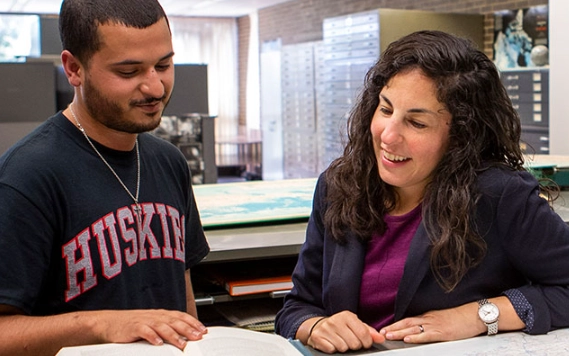
The Art of the Conversation: What to Actually Say
Okay, you're prepared. You're outside the door. Heart beating a little fast. This is the moment. Here's a script, not to follow robotically, but to give you a framework.
Knock, even if the door is open. Wait for a "Come in!"
Introduce yourself. "Hi Professor [Name], my name is [Your Name] from your [Class Name] class. Do you have a few minutes?"
If they say yes, step in. If they're with another student, say, "No problem, I'll wait outside," and do so quietly.
Once you're in and seated, start with your prepared questions. Lead with your best, most specific one. This immediately shows you're serious. The conversation will naturally flow from there.
Pro Tip: Frame your struggles positively. Instead of "I'm totally lost," try "I've been working on understanding [Concept A], and I think I've got the first part, but I'm stuck on how it leads to [Concept B]." This frames you as someone wrestling with the material, not someone who ignored it.
Now, what if you don't have a specific homework question? Maybe you want to discuss the course material more broadly or talk about your major. That's fantastic! Here are some great openers:
- "I found today's lecture on [topic] really fascinating, especially the part about [specific point]. Could you recommend any further reading on that?"
- "I'm really enjoying the class, and I'm considering majoring in this field. Based on what you've seen in the industry, what skills do you think are most important for students to develop now?"
- "I read the article you mentioned by [Author]. I had a question about their methodology..."
See the pattern? It's specific, shows engagement, and invites a substantive conversation beyond "Will this be on the test?"
| Your Goal | What to Say (Starter Ideas) | What to Avoid |
|---|---|---|
| Clarify a Grade | "I reviewed my last exam, and I'm trying to understand my mistake on question #5. I thought [your reasoning], but the feedback says [feedback]. Could you walk me through the correct approach so I don't repeat it?" | "Can you give me more points?" or "I think this should have been right." (Approach it as a learning moment, not a negotiation). |
| Discuss a Paper Idea | "I'm brainstorming my final paper and am leaning towards exploring [your idea]. I was thinking of arguing [your thesis], using sources like [Source A] and [Source B]. Does that sound like a viable direction to you?" | "What should I write my paper about?" (Do the brainstorming first, then seek validation/guidance). |
| Build a Mentorship Connection | "I read about your research on [professor's research area]. My interest is in [your related interest]. I was curious how you got started in that field." | Asking for a job or research position in the first meeting. (Focus on learning about their path first). |
Listen more than you talk. This is your chance to learn from an expert.
Navigating the Awkward & What NOT to Do
Let's address the elephant in the room. Sometimes, it feels awkward. The professor might be quiet, or you might blank on your questions. It happens.
If there's a silence, it's okay. You can refer back to your notes. You can say, "Let me look at my next question." They're used to it. They don't expect you to be a flawless orator.
Major Don'ts:
- Don't show up empty-handed expecting them to re-teach the entire last two weeks of lectures. That's disrespectful of their time.
- Don't ask questions whose answers are clearly stated on the syllabus (e.g., "When is the final?"). You will instantly lose credibility.
- Don't complain about other students, the TA, or the difficulty of the class. Keep it constructive.
- Don't overstay your welcome. Watch for cues. If they glance at the clock or say "Well..." it's time to wrap up. A good rule is 10-15 minutes unless the conversation is really flowing.
And what if the professor seems unapproachable or brusque? Honestly, some are. It's not you. They might be stressed, on a deadline, or just have a less warm personality. Still go. Be polite, be prepared, get your answer, and leave. You've still accomplished your goal. I had a famously gruff economics professor who terrified everyone. I went in with a perfectly prepared question about game theory, he gave me a brilliant, concise answer in 30 seconds, and I left. Mission accomplished. He later wrote me a good letter because he remembered I was one of the few who dared to come and was always prepared.
The Follow-Up: Making It Last
You had a great conversation. Don't let it evaporate. This step is what turns a single visit into a lasting connection.
Within 24 hours, send a brief thank-you email. This is non-negotiable and sets you apart from 95% of students.
Subject: Thank you - [Your Name] from [Class Name]
Body: "Dear Professor [Name], Thank you again for taking the time to meet with me yesterday. Your explanation of [specific concept discussed] really helped clarify things for me. I especially appreciated your point about [specific insight they shared]. I'll apply this as I work on [the next assignment/paper]. Sincerely, [Your Name]"
It's short, specific, and reinforces that their time was well-spent. It also puts your name in their inbox again in a positive context.
Then, don't be a stranger. Go back another time with a new question, or just to check in after a major exam. Consistent, meaningful engagement over a semester is what builds a real academic relationship. These periodic visits to your professor's office hours become the foundation for future opportunities.
Beyond the Basics: Advanced Office Hours Moves
Once you're comfortable with the standard visit, you can use office hours for bigger goals.
Thinking About Graduate School or Research?
Office hours are the perfect, low-pressure setting to express interest. Ask about their research process, what their graduate students are working on, or what makes a strong graduate school application in their field. Expressing genuine curiosity can lead to an invitation to join a lab meeting or even an undergraduate research project.
Networking for Future Careers
Professors are connected. They have former students in industry, they go to conferences, they know people. If you're interested in a particular career path, ask them about it. "I'm exploring careers in [field]. Based on your experience, what does a typical career path look like?" They might just offer to connect you with someone.
Resources from institutions like Princeton's Career Services often emphasize the role faculty connections play in career development, a point many students overlook when thinking about professor office hours.
Common Questions & Concerns (The FAQ You Actually Need)
Putting It All Together: Your Action Plan
Feeling overwhelmed? Don't be. Start small.
- Pick one class this week where you have a specific, prepared question. Write it down.
- Check the syllabus for that professor's office hours time and location.
- Show up 5 minutes before the listed time (in case there's a line). Bring your question, your notes, and the relevant materials.
- Follow the script: Introduce yourself, ask your question, listen, thank them, and leave.
- When you get back to your room, send that thank-you email.
Do this once, and the fear disappears. It becomes a habit. A powerful habit.
Ultimately, viewing professor office hours as a transactional chore is missing the point. It's a unique space for collaborative learning and professional development. It's where you move from passively receiving information to actively engaging with knowledge. Universities like Stanford frame academic advising and faculty interaction as core to the undergraduate experience, not an optional add-on.
The door is literally open. Your professor is in there, probably wondering why more students don't come by. So go. Knock. Ask your question. You might be surprised at how willing they are to help, and how much you can gain from those brief conversations outside the lecture hall.
It's one of the simplest yet most impactful things you can do for your education. Just go.
Reader Comments