Let's be honest. Most advice on effective study habits for students is painfully generic. "Find a quiet place." "Make a schedule." It's not wrong, but it's like telling someone to "be healthy" without explaining nutrition or exercise. After tutoring for over a decade and seeing what separates stressed, cramming students from calm, high-achieving ones, I've realized the gap isn't intelligence. It's process.
Good study habits aren't about willpower. They're a system. A system built on how your brain actually learns, not how you wish it learned. This guide ditches the fluff for tactics you can implement tonight.
What You’ll Learn in This Guide
The Foundation: Mindset & Your Study Environment
You can't build a strong house on sand. Your mindset and physical space are the foundation of everything else.
First, a non-consensus point: the "perfect quiet library" isn't for everyone. Some people focus better with low-fi beats or café background noise. The key is consistency. Your brain forms associations. If you always study history at your desk with a specific lamp on and a certain playlist, turning on that lamp and playlist tells your brain, "It's time to focus on history." This cue reduces the mental effort needed to start.
How to Create a Study Environment That Actually Works
1. Designate a Primary Zone: This is non-negotiable. A specific desk, a corner of the kitchen table—somewhere that is primarily for work. Don't study in bed. Your brain associates bed with sleep (or relaxation), and you'll fight an uphill battle for focus.
2. Control the Digital Swamp: This is the modern student's biggest hurdle. A single phone notification can derail your focus for over 20 minutes. Use app blockers like Freedom or Cold Turkey. Put your phone in another room. If you need your laptop, use a separate browser profile for study with no social media bookmarks.
3. Gather Your Tools Before You Start: Water, notebook, textbooks, calculator, charger. Minimize reasons to get up and wander, which often leads to distraction.
Your mindset is part of the environment too. Ditch the "I have to study for 4 hours" marathon mentality. It's daunting and promotes procrastination. Instead, think in terms of specific, achievable sessions: "I will work on completing 10 calculus problems" or "I will create a concept map for Chapter 7."
Active Learning Techniques That Beat Passive Reading
Here's the critical mistake I see 95% of students make: they think reading and re-reading is studying. It's not. It's reviewing. It's passive. Your eyes glide over familiar text, and you get an illusion of competence. Then the exam asks you to apply a concept, and you freeze.
Effective study habits require active engagement. You must force your brain to retrieve and manipulate information. It's harder in the moment, but it makes learning stick. Research from the American Psychological Association highlights the power of retrieval practice over passive review.
- The Feynman Technique: Explain a concept out loud, as if to a 12-year-old. No jargon. The gaps in your explanation reveal exactly what you don't understand. Go back and learn those parts.
- Practice Testing & Self-Quizzing: This is king. Use end-of-chapter questions, make your own flashcards (digital ones like Anki use spaced repetition, which is a game-changer), or have a friend quiz you. The act of recall strengthens neural pathways.

- Interleaving: Don't block-study one topic for hours. Mix related but distinct topics. Study math, then switch to history, then back to a different type of math problem. It feels harder, but it teaches your brain to discriminate between problem types and apply the right solution.
- Elaboration & Connection: Ask "why" and "how." How does this historical event connect to today's politics? Why does this chemical reaction work this way? Connect new info to what you already know. Write these connections in the margins.
Personal Take: I used to be a chronic highlighter. My textbooks were neon rainbows. I thought colorful pages meant a learned brain. It meant nothing. Now, I force myself to write a one-sentence summary at the end of each paragraph in the margin. If I can't, I re-read. This tiny shift from passive highlighting to active summarizing changed everything.
Smart Time & Energy Management (Beyond the To-Do List)
Time management isn't just about filling a calendar. It's about aligning work with your natural energy cycles.
Are you a morning person? Tackle your hardest subject right after breakfast. Night owl? Reserve that time for deep reading. Schedule your most demanding cognitive work for your peak hours. Save administrative tasks (organizing notes, printing materials) for your low-energy slumps.
The Pomodoro Technique, But Better
The classic Pomodoro (25 minutes work, 5-minute break) is a great start. But here's the tweak: define the work block's goal before the timer starts. Not "study biology," but "complete the 5 practice problems on cellular respiration." This prevents aimless scrolling during your work time. After four cycles, take a longer 20-30 minute break. Get up, walk, snack, stare out a window—no screens.
Planning is crucial. On Sunday, do a weekly preview. Look at all your deadlines and commitments. Block out fixed times for classes, work, and meals. Then, in the remaining slots, theme your days. Maybe Monday is Math & Physics day, Tuesday is History & Writing day. This reduces decision fatigue. You don't waste time each evening figuring out what to study; you already know Tuesday is for history.
And for the love of your sanity, schedule guilt-free downtime. If it's not in the plan, you'll feel guilty when you relax, which makes relaxation ineffective. Scheduled fun is part of the system.
Maintaining Momentum and Beating Burnout
No system survives contact with a bad week. You'll get sick, have a family thing, feel utterly unmotivated. The goal isn't perfection; it's resilience.
Sleep is non-negotiable. Pulling an all-nighter destroys the memory consolidation that happens during sleep. You might get the info on the page, but it'll be gone in a week. Sacrificing sleep for study is like taking out a high-interest loan on your grades.
When you hit a wall, use the 5-Minute Rule. Commit to working on the dreaded task for just five minutes. Often, starting is the hardest part, and momentum carries you forward. If after five minutes you're still miserable, stop. But usually, you'll keep going.
Finally, track your progress, not just your output. Don't just check off "studied biology." Note what you accomplished: "Understood the Krebs cycle well enough to draw it from memory." This focus on mastery, not time spent, is more satisfying and shows real growth.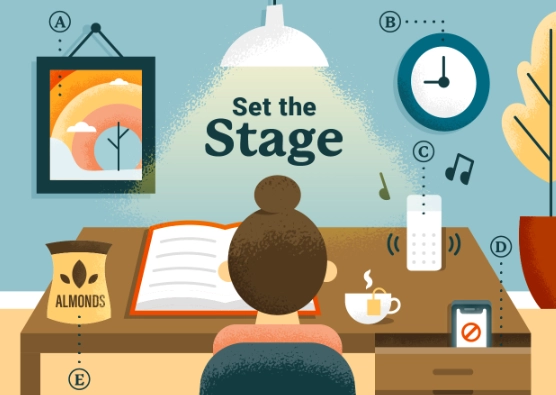
Your Top Study Questions, Answered
Building effective study habits is like building muscle. It's awkward and tiring at first. You won't get it right every day. But by focusing on systems—active learning, smart time blocking, and a supportive environment—you stop fighting your brain and start working with it. Pick one technique from this guide, try it for a week, and see what sticks. The compound effect over a semester is massive.
Reader Comments