If you're asking this question, you're probably staring at your transcript, trying to do some mental math, and feeling a knot in your stomach. Is 23 credits enough? Will I walk across that stage? The short, direct answer is: Almost certainly not. A typical bachelor's degree in the United States requires around 120 to 130 semester credits. 23 credits is barely a year's worth of full-time study.
But that's just the surface. The real question you're asking is deeper: "How do I actually figure out what I need to graduate, and how can I make sure I'm on track?" I've worked with enough panicked seniors to know that the credit system is one of the most misunderstood parts of college. Let's break it down so you can stop guessing and start planning.
What's Inside?
Understanding Credit Systems: It's Not Just a Number
First, let's clear up what a "credit" even means. In the standard semester system, one credit hour generally represents one hour of classroom or direct faculty instruction per week over a 15-week semester. A 3-credit course means about 3 hours in class each week. Most full-time students take 12 to 15 credits per semester.
But here's the first twist many don't see coming: some schools use quarter systems. In a quarter system, the academic year is split into three 10-week terms. Credits here are "quarter credits." They are not equal to semester credits. You typically need more of them to graduate—often around 180 quarter credits for a bachelor's. A 4-credit quarter course might be equivalent to a 2.67-credit semester course. If you transfer between systems, this conversion is a major headache point.
Key Takeaway: Always know which system your school uses. If someone says they have "23 credits," your first question should be, "Semester or quarter credits?" It changes everything. The National Center for Education Statistics (NCES) provides overviews of institutional characteristics, but your college catalog is the final authority.
Where Does "23 Credits" Actually Fit In?
So, if 120+ is the goal, 23 credits is what? It's a solid start for a freshman, or it could be what's left for a senior. Context is king.
Scenario A: The Incoming Freshman. You have 23 Advanced Placement (AP) or dual enrollment credits. That's fantastic! It might knock out your entire first-year writing requirement, a lab science, and a history class. You're ahead of schedule, potentially saving a semester's tuition.
Scenario B: The Anxious Senior. You think you only need 23 more credits to finish. This is the critical check. You must verify this with your advisor immediately. Is that 23 credits of anything, or 23 credits of specific, required upper-level major courses that are only offered in the spring? The latter scenario can delay graduation by a full year if missed.
I once met a student who was sure she needed "just 15 more credits." Turned out, 9 of those credits were for a mandatory internship sequence that required pre-approval the prior semester. She missed the deadline and had to stay an extra term. The devil is in the details.
The Real Requirements Breakdown: General Ed vs. Major
Your total credit goal is made of several buckets. Missing a requirement in any bucket means no diploma. It's not one big number; it's a puzzle.
Here’s a typical breakdown for a 120-credit Bachelor of Arts degree:
| Requirement Category | Typical Credit Range | What It Includes | The Hidden Catch |
|---|---|---|---|
| General Education Core | 40-50 credits | Writing, Math, Sciences, Humanities, Social Sciences, Diversity. | Specific courses may be mandated (e.g., "Math 110" not just any math). |
| Major Requirements | 40-60 credits | Intro, core, and upper-level courses in your chosen field. | Courses must be taken in sequence; pre-requisites can create bottlenecks. |
| Minor / Electives | 20-30 credits | Additional focus area or free-choice courses. | Electives aren't "free"; they must often be at a certain level (e.g., 300+). |
| Institutional Requirements | 0-10 credits | First-year seminar, physical education, foreign language. | Easy to overlook in early planning, hard to cram in later. |
See the problem with just asking "Do I need 23 credits?" You need to ask, "23 credits of what?" If those 23 credits are all upper-division psychology courses for your Psych major, and you've finished everything else, then yes, you're on the final stretch. If they're just any 23 credits, but you haven't touched your science lab requirement, you're not done.
How to Plan Your Path to Graduation (Step-by-Step)
Don't rely on memory or a vague plan. You need a system.
Step 1: Get Your Official Audit. Every school has a degree audit tool (like DegreeWorks, uAchieve, etc.). Run it today. This is the single most important document. It's a contract between you and the registrar. It shows exactly what's fulfilled and what's left, categorized by those buckets we discussed.
Step 2: Map It Backwards. Start with your intended graduation semester. Work backwards. Identify courses offered only once a year. Block those in first. For example, if "Advanced Biomechanics" is only offered in the Fall of your senior year, you must ensure you complete its two pre-requisites by the end of your junior year.
Step 3: Build a Visual Plan. Use a simple spreadsheet or even a paper planner. Create a column for each semester until graduation. Plug in the specific course names and numbers you need to take each term. This visual map is your GPS. I've seen students color-code by requirement (blue for Gen Ed, green for major, etc.). It works.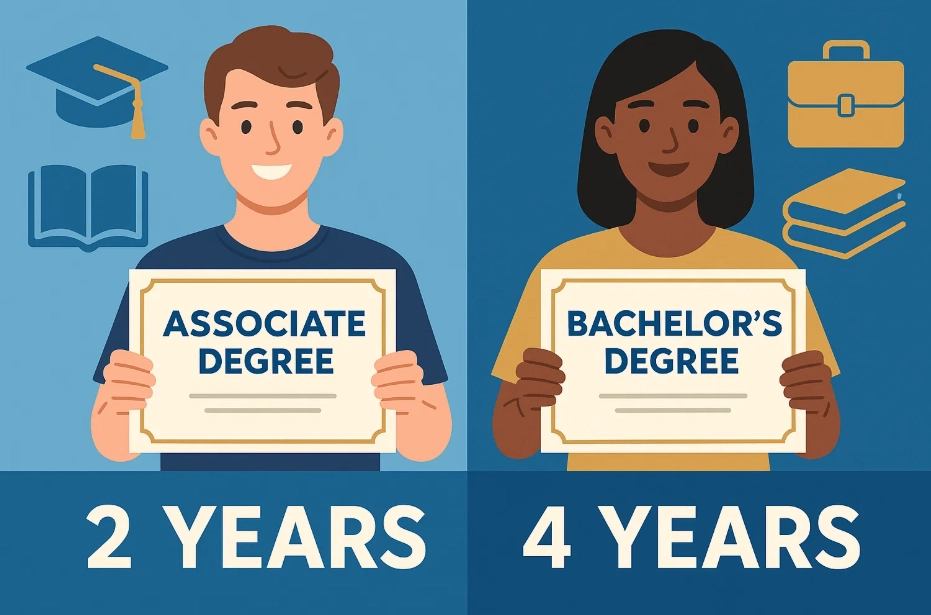
Pro Tip Most Miss: Schedule a mandatory "planning meeting" with your advisor every single semester, the week before registration opens. Bring your visual plan. This turns the conversation from "What should I take?" to "Here's my plan for graduation, does this look right to you?" It makes you the driver, not a passenger.
Common Pitfalls Even Advised Students Miss
After a decade, the same issues pop up repeatedly.
The "D" is Not a Pass. Many majors require a C- or better in core courses. You might earn 3 credits for a D in Organic Chemistry, but if your Biology major requires a C, you didn't earn the requirement, just empty credits. You'll have to retake it.
Residency Requirements. Most colleges require you to earn a minimum number of credits at their institution to get their diploma. You can't transfer in 119 credits from elsewhere and take 1 online class to graduate. This is often called "in residence" credit. Check your catalog.
The "Credit Overload" Illusion. A student crams in 18 credits to graduate early but bombs two major courses because of the workload. Now they have to retake them, delaying graduation more than if they had taken a balanced 15-credit load. Speed isn't always efficiency.
Ignoring the Fine Print on Transfers. That community college course might transfer as 3 credits, but does it fulfill your specific "Quantitative Reasoning" requirement, or does it just land as a generic elective? Get transfer pre-approval in writing.
Your Credit & Graduation Questions, Answered
If I transfer colleges, how do I know which of my 23 credits will count toward their graduation requirements?
You can't assume they all will. The receiving school's registrar does an official evaluation, course-by-course. A credit might transfer as "elective" credit but not satisfy a specific major requirement. The smart move is to get this evaluation before you commit to transferring. Contact the new school's admissions or registrar office and ask for a "transfer credit pre-evaluation." Provide your unofficial transcripts. It's extra work, but it prevents the heartbreak of losing a year's worth of coursework.
My degree audit says I need 122 credits, and I have 119. Can I just take three 1-credit gym classes to finish?
Probably not, and this is a classic trap. You need to meet the credit and the categorical requirements. The audit likely shows you're missing credits in a specific category, like "Upper-Division Major Electives." A 1-credit gym class would only fill an "Elective" or "Institutional" bucket. You must fulfill the missing category. Always look at what is missing, not just how many.
I failed a 4-credit required course. Do I now need 4 extra credits on top of everything else to graduate?
In most cases, yes. The credits from the failed class likely don't count toward your total (a grade of F often earns 0 credit hours). So you lose those 4 credits from your progress total. To hit your 120-credit goal, you'll need to make up both the requirement (by retaking the class or an approved substitute) and the credit hours. This is why failing a required course is so costly—it's a double setback in time and money.
Are there any bachelor's degrees where you actually only need around 23 credits?
Virtually none for a first bachelor's degree. However, you might encounter this number in two scenarios: 1) Post-baccalaureate programs for career changers (e.g., a 23-credit certificate in accounting after a BA in English). 2) Completion degrees for students with vast amounts of prior college credit or an associate's degree. Some universities offer "degree completion" programs where you only need, say, 30 upper-division credits in a major to finish, assuming you have 90+ transfer credits. But the total to earn the bachelor's still originated near 120. "23 credits to graduate" on its own is a red flag—always verify the full context and accreditation of the program.
So, do you need 23 credits to graduate? Now you know the right questions to ask. It's not about hitting a random number. It's about strategically completing a detailed set of academic requirements. Pull your degree audit, make your plan, and talk to your advisor with confidence. Your path to graduation is a puzzle, but you've just been handed the picture on the box.
Leave a Comment