Let's be honest. Most common study advice is useless. "Find a quiet place," "make a schedule," "take breaks." It's generic, and it doesn't tackle the real problem: your brain isn't wired to absorb information through passive reading and re-reading. After tutoring students for over a decade, I've seen the same pattern. The students who struggle aren't lazy; they're using broken tools. They highlight entire textbooks, cram the night before, and then wonder why they can't remember anything a week later.
The real secret lies in methods that force your brain to work. These aren't my opinions; they're techniques validated by decades of cognitive science research from institutions like the American Psychological Association. They feel harder in the moment because they are—active effort is the price of deep learning. Below are the seven most powerful, under-the-radar methods that can transform how you learn anything, from organic chemistry to a new language.
Your Quick Navigation Guide
- Secret #1: Spaced Repetition (The Forget-to-Remember Trick)
- Secret #2: Active Recall (Ditch the Highlighter)
- Secret #3: The Feynman Technique (Teach a 5th Grader)
- Secret #4: Interleaving (Stop Binge-Studying One Topic)
- Secret #5: Deliberate Practice (Find Your "Struggle Zone")
- Secret #6: Environmental Design (Context is King)
- Secret #7: Mental Models & The "Why" Behind Facts
- Your Questions Answered (The Real-World Stuff)
Secret #1: Spaced Repetition (The Forget-to-Remember Trick)
This is the single most effective method for moving information from your short-term to your long-term memory. The core idea is counterintuitive: you must allow yourself to start forgetting before you review. Instead of reviewing your notes every day, you review them at increasing intervals.
Here's the typical mistake I see. A student learns a set of vocabulary words on Monday. They review them on Tuesday (good), again on Wednesday (okay, but diminishing returns), and maybe Thursday. They're spending time on stuff they already know. Spaced repetition says: review Monday, then wait until you're *almost* about to forget—say, Thursday. Then wait even longer, like a week, then two weeks.
This process of retrieving information just as it's getting fuzzy strengthens the memory trace far more than easy, frequent review. A seminal paper published in Psychological Science calls this the "spacing effect," and its benefits are massive.
How to do it practically: Don't rely on your gut to guess when to review. Use an app like Anki or Quizlet. You create digital flashcards, and the app uses an algorithm to show you cards right before you'd likely forget them. I used this for medical terminology. I'd see a card the next day, then if I got it right, in three days, then a week, then a month. A year later, I still knew those terms cold.
Secret #2: Active Recall (Ditch the Highlighter)
Reading and re-reading is passive. Your brain is on autopilot. Active recall is the practice of actively stimulating your memory without looking at the source material. Close the book, put away your notes, and ask yourself: "What were the five main points from that chapter?"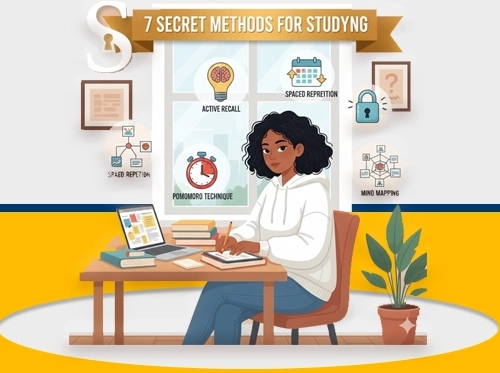
The struggle is where the learning happens. A study from Purdue University found that students who practiced active recall by testing themselves significantly outperformed those who simply restudied the material.
Here's a simple switch. Instead of spending 60 minutes re-reading a chapter, spend 20 minutes reading it once with focus. Then spend 40 minutes with a blank sheet of paper. Write down everything you can remember. Draw concept maps from memory. Explain the key arguments out loud. Then, and only then, open the book to check what you missed or got wrong. Those gaps are your true study focus.
This feels awful at first. You'll stare at the blank page. That's the point. You're building retrieval strength, not just recognition strength (which is what highlighting gives you).
Secret #3: The Feynman Technique (Teach a 5th Grader)
Named after the Nobel physicist Richard Feynman, this method forces true understanding. The rule is simple: if you can't explain a concept in simple terms, you don't really understand it.
Here's the 4-step process:
- Choose a concept. Write it at the top of a page.
- Explain it in plain language, as if teaching a bright 12-year-old. Avoid jargon. Use simple analogies.
- Identify the gaps. Where did you get stuck? Where did you have to resort to complex terms? Those are the parts you only vaguely understand.
- Review and simplify. Go back to your source material. Study the fuzzy parts until you can explain them simply. Repeat the cycle.
The magic is in step 2. You immediately discover what you *think* you know versus what you *actually* know. I used this for understanding macroeconomic models. Explaining "quantitative easing" without using the words "central bank" or "liquidity" was brutally revealing—and exactly what I needed.
Secret #4: Interleaving (Stop Binge-Studying One Topic)
You have a math test with chapters on geometry, algebra, and calculus. The standard approach is to study all of geometry (blocked practice), then all of algebra, then all of calculus. This feels efficient, but it teaches your brain to recognize which formula to use based on the immediate context (the "geometry chapter").
Interleaving mixes different topics or types of problems within a single study session. Do a geometry problem, then a calculus problem, then an algebra problem. This feels harder and more frustrating. You're constantly switching mental gears. But research, like that cited by the Learning Scientists, shows this dramatically improves your ability to discriminate between problem types and choose the right strategy on a mixed test.
It's like practicing tennis. You wouldn't just hit 100 forehands, then 100 backhands. You'd mix them up, because in a game, you don't know what's coming next. Apply the same logic to your studies.
Secret #5: Deliberate Practice (Find Your "Struggle Zone")
Not all practice is equal. Mindlessly doing 50 similar, easy problems is just busywork. Deliberate practice, a concept popularized by Anders Ericsson, is focused, goal-oriented, and targets your specific weaknesses.
Think of it like this:
- Ineffective Practice: Solving problems you already know how to solve.
- Deliberate Practice: Isolating the specific type of problem that makes you stumble (e.g., "I always mess up integrals with trigonometric substitution") and drilling only that, with full concentration, until it's mastered.
This requires brutal self-honesty. You must identify your "struggle zone"—the edge of your current ability—and live there. It's uncomfortable. You'll make more errors. But that's the only place growth happens.
Secret #6: Environmental Design (Context is King)
Your environment dictates your behavior more than your willpower. If your phone is next to you, you will check it. If your study space is also your bed, you will get sleepy. This method is about engineering your surroundings to make good habits easy and bad habits hard.
This isn't just "find a quiet library." It's more tactical.
- Dedicate a single spot for deep work. Only study there. Don't browse social media, eat, or watch videos there. Your brain will associate that spot with focus.
- Use different physical contexts for different subjects. Study biology at the kitchen table and history in the living room chair. The varied environmental cues can help create distinct memory traces, reducing interference (a phenomenon supported by memory research).
- Make distractions physically inconvenient. Put your phone in another room. Use a website blocker. I have a cheap timer I use for Pomodoro sessions; my phone isn't even in the equation.
I learned this the hard way trying to study in my bedroom. My brain associated the room with sleep and relaxation. Moving to a specific desk in a different room cut my procrastination in half.
Secret #7: Mental Models & The "Why" Behind Facts
Rote memorization is fragile. It's like holding a stack of papers—drop one, and it's gone. Building a mental model is like building a filing cabinet. You understand how the facts connect and why they're true, so even if you forget a detail, you can reason your way back to it.
Instead of just memorizing that "supply goes up, price goes down," ask: Why? Build the story. Sellers have more to sell, they compete for buyers, so they lower prices to attract them. Now you have a model of market competition you can apply to other situations.
When learning history, don't just memorize dates. Build a model of the political, economic, and social tensions that led to an event. The dates become anchor points on a map you've drawn, not isolated islands.
This takes more upfront time. But it leads to flexible knowledge you can apply on complex exam questions or in real life. It's the difference between knowing the notes and understanding the music.
These seven methods work because they align with how your brain actually learns, not with how we *wish* it learned. They require more initial effort than passive reviewing, but they save you countless hours of ineffective cramming later.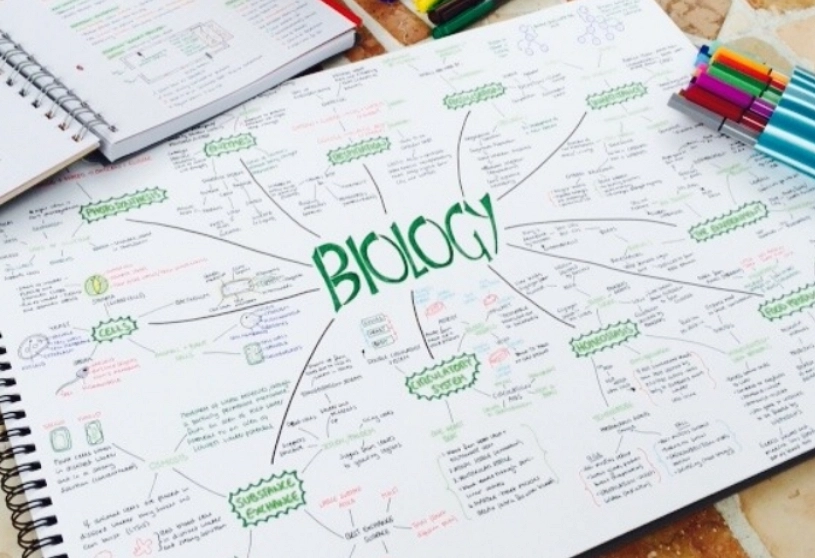
Your Questions Answered (The Real-World Stuff)
I have very little time before my exam. Which one of these 7 secret methods for studying should I prioritize?
Focus on Active Recall and Spaced Repetition together. Ditch re-reading entirely. Use the last 48 hours to aggressively test yourself on the material using flashcards (physical or digital) you create. Every minute spent trying to remember something from scratch is worth five minutes of passive reading. Even in a cram, forcing retrieval is your most powerful tool.
How can I use the 7 secret methods for studying when my textbook is just walls of dense text?
Turn the dense text into questions and answers for Active Recall. As you read a paragraph, ask: "What is the one key idea here?" Write that as a question on a flashcard (e.g., "According to Chapter 3, what are the three causes of the French Revolution?"). The answer goes on the back. You're not copying text; you're transforming it into a retrieval tool. Then, use the Feynman Technique on the most confusing paragraphs to force simplicity and understanding.
These methods sound mentally exhausting. How do I avoid burnout while using them?
They are exhausting, and that's normal—it means you're doing real work. The key is to work in short, timed bursts. Use the Pomodoro Technique: 25 minutes of intense, focused study using these methods, followed by a strict 5-minute break. After four cycles, take a longer 20-30 minute break. This structures the effort and prevents mental fatigue from blending into a 3-hour slog of low-effectiveness. Also, remember that effective learning often means you need less total study time overall, freeing up more time for genuine rest.
Is there a specific order to apply these 7 secret study methods?
Not a strict order, but a logical flow. Start with Environmental Design to set the stage. Then, as you encounter new material, focus on building Mental Models and using the Feynman Technique to ensure understanding. Consolidate that knowledge using Active Recall (flashcards, self-testing) and schedule your reviews with Spaced Repetition. When practicing problems or related topics, use Interleaving. Throughout, apply Deliberate Practice by constantly identifying and attacking your weakest points. They are tools in a toolkit, used together.
Reader Comments