In This Guide
- What Are We Even Talking About? Defining Critical Thinking Without the Jargon
- The Core Toolkit: Breaking Down the Essential Critical Thinking Skills
- How to Actually Improve Your Critical Thinking Skills (No Theory, Just Practice)
- Where This All Pays Off: Real-World Applications
- Common Traps That Cripple Your Critical Thinking (And How to Avoid Them)
- Integrating Critical Thinking Into Your Life's Operating System
- Your Critical Thinking Questions, Answered
Let's be honest. "Critical thinking" is one of those buzzwords that gets thrown around in job descriptions, self-help books, and university brochures until it loses all meaning. It starts to sound like a magical superpower you either have or you don't. I used to think that way too. I'd see it listed as a requirement and just nod, assuming it meant "be smart." It wasn't until I made a series of pretty bad decisions—choosing the wrong project at work, falling for a convincing but flawed sales pitch, even arguing poorly with a friend—that I realized I had no concrete system for thinking well. I was just reacting.
That's what this is about. Stripping away the academic fluff and getting to the practical core. Critical thinking skills aren't about being the smartest person in the room. They're a set of tools, a disciplined process you can learn, to navigate a world overflowing with information, opinions, and outright nonsense. It's the difference between being a passenger in your own mind and being the driver.
What Are We Even Talking About? Defining Critical Thinking Without the Jargon
Let's cut through the jargon. Think of your brain as a busy newsroom. Information is constantly flooding in—headlines, tweets, a colleague's opinion, data from a report, your own gut feeling. Without critical thinking, the newsroom is chaotic. The loudest voice (your bias) or the most urgent headline (your emotion) gets published as fact.
Critical thinking skills are the editor-in-chief. They are the active, systematic process of:
- Questioning everything, especially your own assumptions. (Why do I believe this?)
- Analyzing information by breaking it down into its parts. (What's the evidence? What's the source?)
- Evaluating arguments and evidence for quality and relevance. (Is this logic sound? Is this data reliable?)
- Synthesizing different pieces of information to form a new, coherent understanding.
- Reaching a reasoned conclusion or solution that is supported by the best available evidence, not just what feels right.
It's not negative thinking. It's not about criticizing for the sake of it. It's disciplined thinking. The Foundation for Critical Thinking, a leading authority in the field, describes it as the "intellectually disciplined process" of conceptualizing and evaluating information. You can explore their detailed conceptualization on their official website to deepen your understanding of the framework.
So why does this feel so hard? Because our brains are wired for efficiency, not accuracy. We use mental shortcuts (heuristics) and are swayed by cognitive biases. Good critical thinking is about recognizing and correcting for those built-in flaws.
The Core Toolkit: Breaking Down the Essential Critical Thinking Skills
You can't build a house without knowing your tools. Here are the fundamental skills that make up your critical thinking toolkit. Don't worry about mastering them all at once. Spot one you're weak in, and start there.
Observation and Description
Before you can analyze, you have to see clearly. This means separating pure observation from interpretation. If your coworker is late, the observation is "they arrived at 10:15 AM." The interpretation is "they are lazy and disrespectful." Critical thinking starts by clinging fiercely to the observation and treating the interpretation as a hypothesis to be tested.
Analysis: The Art of Taking Things Apart
This is where you dissect information. What are the main components of this argument? What are the key steps in this process? In a business report, analysis might mean separating the raw data from the author's conclusions and looking at each independently.
Inference: Reading Between the (Logical) Lines
This is about drawing logical conclusions from what you observe and analyze. If a website selling a "miracle supplement" has no listed ingredients, cites no scientific studies, and uses dozens of emotional testimonials, you can logically infer it's not trustworthy. You're connecting the dots based on evidence.
Evaluation: Your Built-in Bullsh*t Detector
Perhaps the most crucial skill. This is judging the credibility of sources and the strength of arguments. It asks questions like:
- Source Credibility: Who said this? What is their expertise? Do they have a conflict of interest?
- Argument Strength: Is this based on solid evidence or just anecdotes? Are there logical fallacies?
- Data Reliability: How was this data collected? Is the sample size representative?
For a masterclass in evaluating complex arguments and evidence in public and scientific discourse, the Stanford Encyclopedia of Philosophy's entry on informal logic is an incredible, if dense, resource.
Metacognition: Thinking About Your Thinking
This is the game-changer. It's the practice of stepping back and observing your own thought process. "Why did I immediately agree with that politician's statement? Is it because it aligns with my existing beliefs?" "I feel very defensive about this feedback. Is there a kernel of truth in it I'm avoiding?" This self-awareness is the foundation for improving all other skills.
Here's the uncomfortable truth: most of us are terrible at metacognition. We confuse the feeling of certainty with being right. Actively questioning your own conclusions is the hardest, but most rewarding, part of the critical thinking journey.
How to Actually Improve Your Critical Thinking Skills (No Theory, Just Practice)
Okay, enough theory. How do you build these muscles? You don't get stronger by reading about weightlifting. You lift. Here are concrete exercises.
Daily Drills for a Sharper Mind
- The "Why" Chain: Next time you have a strong opinion or belief, ask yourself "Why do I believe this?" Then take that answer and ask "Why?" again. Do this 5 times. You'll often find your foundation is shakier than you thought.
- Argue the Opposite: Pick a topic you feel strongly about. Spend 15 minutes constructing the best possible argument against your position. This isn't to change your mind, but to understand the other side and find weaknesses in your own stance.
- Consume Diverse Media: If you always read news from outlet A, deliberately read a well-argued piece from outlet B on the same issue. Don't do it to get angry. Do it to analyze: What facts do both sides agree on? Where do their interpretations diverge? What values are underlying their arguments?
Structured Frameworks for Big Decisions
For bigger life or work decisions, a framework helps. Try the Pro/Con/Insight list, but with a twist. Instead of just listing pros and cons, add a third column: "What do I need to find out?" This forces you to identify gaps in your knowledge before deciding.
| Decision: Should I take the new job offer? | Pros | Cons | What I Need to Find Out |
|---|---|---|---|
| Financial | 20% higher salary | Longer commute costs | Exact cost of commute, bonus structure details |
| Career Growth | Managerial title | Smaller company, less brand recognition | Talk to current employees about promotion history |
| Work-Life | Remote-flex policy | Vague about on-call expectations | Ask HR for written policy, ask team about actual after-hours workload |
See the difference? The third column moves you from passive listing to active investigation. That's critical thinking in action.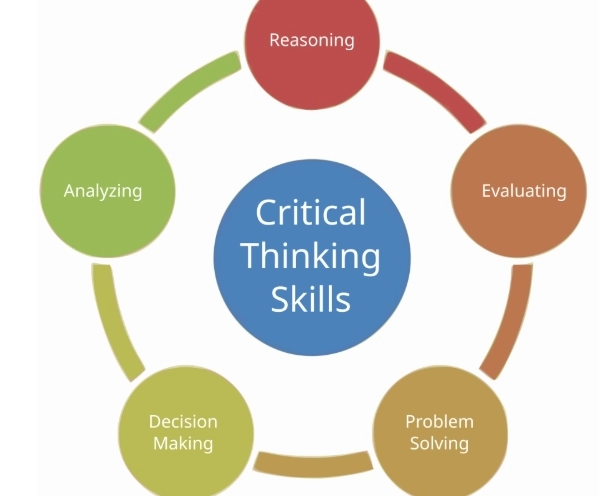
Where This All Pays Off: Real-World Applications
This isn't just mental gymnastics. Here’s where sharp critical thinking skills change the game.
In Your Career
You stop being an order-taker and become a problem-solver. When your boss proposes a plan, you can analyze its potential pitfalls and suggest stronger alternatives. You evaluate market data to make better strategic recommendations. You cut through office politics and gossip by focusing on observable facts and evidence. A Harvard Business Review article rightly frames it as the key to asking better questions, which is the root of innovation and effective leadership.
In Your Personal Life
From major purchases to relationships. Should you buy that extended warranty? A critical thinker reads the fine print, researches failure rates of the product, and calculates the cost vs. potential benefit. In a disagreement with a partner, it helps you move from "you always..." (a generalization) to "When X happened, I felt Y because of Z" (a specific observation and explanation). It's about solving the problem, not winning the fight.
As a Digital Citizen
This is maybe the most vital application today. Faced with a shocking news headline or a viral social media post, a person with strong critical thinking skills pauses. They check the source before sharing. They look for corroboration from other reputable outlets. They ask if the headline matches the article's content (often it doesn't). They become a dam against the flood of misinformation, rather than a conduit for it.
Common Traps That Cripple Your Critical Thinking (And How to Avoid Them)
Knowing the path isn't the same as walking it. Here are the potholes that will trip you up. I've been guilty of most of these.
Confirmation Bias: The mother of all biases. We seek, interpret, and remember information that confirms what we already believe. Your social media feed is a confirmation bias engine. Antidote: Deliberately seek out credible sources that challenge your views. Follow smart people you disagree with.
The Dunning-Kruger Effect: When you know a little about a topic, you're often most confident. As you learn more, you realize how complex it is and your confidence dips. The truly ignorant are often the most certain. Antidote: Cultivate intellectual humility. Adopt the mantra "I could be wrong" as a starting point for learning.
Emotional Reasoning: "I feel it's true, therefore it is." Feelings are real data about your internal state, but they are terrible evidence about the external world. Feeling betrayed doesn't mean someone betrayed you. Antidote: Separate the feeling from the fact. "I feel anxious about this presentation" is a fact about you. "This presentation will be a disaster" is an unproven prediction.
Black-and-White Thinking: Seeing only extremes, no shades of gray. Someone is either a genius or a fool. A policy is either perfect or a complete disaster. Reality is almost always nuanced. Antidote: Actively look for the middle ground, the mitigating factors, the partial truths on both sides.
Integrating Critical Thinking Into Your Life's Operating System
This isn't a switch you flip on for big decisions. It's an operating system you install. It starts to run in the background.
You'll catch yourself about to share an article and stop to read it first. You'll pause in a meeting and ask, "What evidence supports that assumption?" You'll hear your own internal monologue making a snap judgment and gently challenge it. It becomes less of a formal process and more of a mindset—a default stance of curious, disciplined skepticism.
The goal isn't to become a cynical, over-analyzing robot who can't enjoy life. It's the opposite. It's to build a sturdier foundation for your beliefs, your decisions, and your actions so you can live with more confidence, make fewer costly mistakes, and engage with the world more effectively. You trade the cheap thrill of reactive certainty for the hard-won satisfaction of reasoned understanding.
And that, frankly, is a trade worth making.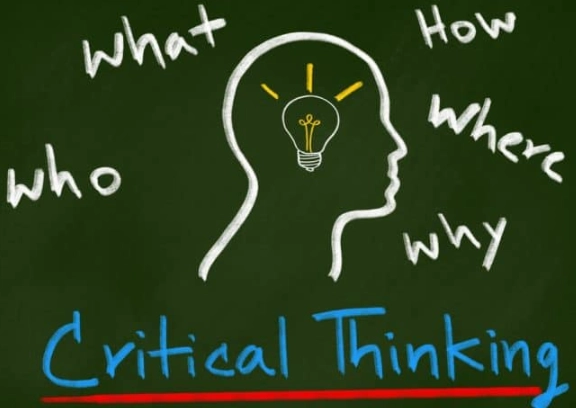
Your Critical Thinking Questions, Answered
Isn't critical thinking just being skeptical and negative?
This is the biggest misconception. Healthy skepticism is a component—it means not accepting claims without evidence. But negativity? No. True critical thinking is constructive. It aims to find the best, most supported answer or solution. It's about building up understanding, not just tearing down ideas.
Can you be a critical thinker and still be creative/ intuitive?
Absolutely. They are partners, not enemies. Critical thinking is the editor; creativity and intuition are the writers. You need wild, free-flowing ideas (creativity) and gut feelings (intuition). Critical thinking skills then help you evaluate, refine, and execute the best of those ideas. It turns a creative spark into a viable plan.
How long does it take to see improvement?
You'll see small wins immediately. The first time you catch a logical fallacy in an advertisement or pause before sending an angry email, that's improvement. Building it into a consistent habit takes months of conscious practice. It's like learning a language—you start with simple phrases before you can have a fluent conversation.
Are some people just born with better critical thinking skills?
Some personality traits (like curiosity or openness) might give a slight head start. But overwhelmingly, critical thinking is a learned skill. It's not about innate intelligence. It's about learned discipline. Anyone willing to put in the work can significantly improve.
Look, the world isn't getting simpler. The pressure to react quickly is immense. But the cost of reacting poorly is higher than ever. Investing in your critical thinking skills is the single most practical thing you can do to future-proof your career, your relationships, and your own peace of mind. Start small. Ask one more question than you usually would. Challenge one assumption today—even if it's your own.
The quality of your thinking determines the quality of your life. It's time to start building a better editor for that busy newsroom in your head.
Leave a Comment