Let's cut to the chase. You're a talented high school athlete, and you've heard about NCAA Division 2 athletic scholarships. Maybe a coach mentioned it, or you saw a friend get an offer. But the information out there is a mess—full of myths, oversimplifications, and hype. Is it a path to a free ride? A consolation prize? The truth is, D2 scholarships represent a unique and often misunderstood sweet spot in college sports. They offer substantial financial aid, competitive athletics, and a focus on the whole student. I've spent over a decade advising families through this process, and the biggest mistake I see is athletes dismissing D2 before they even understand what's on the table. This guide isn't about selling you a dream; it's about giving you the concrete, actionable information you need to navigate the D2 recruiting landscape and make a smart decision.
What You’ll Learn in This Guide
- What Are Division 2 Athletic Scholarships Really?
- How Much Money Can You Actually Get?
- The D2 Recruiting Timeline: A Step-by-Step Guide
- The Academic Game: Meeting NCAA Eligibility
- How to Get Noticed and Contact Coaches
- Common Mistakes Athletes Make (And How to Avoid Them)
- A Real Scenario: Mapping a Plan
- Your Questions, Answered
What Are Division 2 Athletic Scholarships Really?
Think of the NCAA as having three tiers. Division 1 is the big-budget, high-profile world you see on TV. Division 3 offers no athletic scholarships at all. Division 2 sits squarely in the middle, built on a philosophy it calls "Life in the Balance."
This isn't just a slogan. It means D2 schools are designed for athletes who want a highly competitive sports experience but also want to be a regular student. The travel schedules are often regional, missing less class time. The pressure, while real, tends to be different from the 24/7 grind of some D1 programs. The scholarship model reflects this balance.
Here’s the core mechanic: D2 schools have a pool of partial scholarships to allocate per team. Unlike D1's head-count sports (like football) where a scholarship is a full ride, most D2 sports are "equivalency" sports. The coach has a total dollar amount to divide up. They can give ten players half scholarships, twenty players quarter scholarships, or any combination that fits the team's needs and budget.
This is where strategy comes in. A coach might offer a top recruit 70% of a scholarship to secure them, and fill out the roster with players on 10-25% awards. It’s a puzzle. Your goal is to be a piece a coach is willing to invest a significant chunk of that puzzle in.
| Feature | NCAA Division 1 | NCAA Division 2 | NCAA Division 3 |
|---|---|---|---|
| Athletic Scholarship Model | Full-ride (head-count) or partial (equivalency), depending on sport. | Primarily partial scholarships (equivalency). | No athletic scholarships. Financial aid is need/merit-based only. |
| Competition & Time Commitment | Highest level, often national schedule, major time demand. | Highly competitive, mostly regional schedule, emphasis on balance. | Competitive, strong emphasis on student-first experience. |
| Typical School Size & Focus | Large universities, major research institutions. | Mid-sized universities, often with strong regional identities. | Small to mid-sized colleges, liberal arts focus common. |
| Best For Athletes Who... | Prioritize athletics at the highest possible level and seek a full scholarship. | Want significant financial aid for sports while maintaining a balanced college life. | Love their sport but prioritize academics and campus life over athletic funding. |
How Much Money Can You Actually Get?
"Partial scholarship" sounds vague. Let's put real numbers on it.
The total cost of attendance (COA) at a D2 school includes tuition, fees, room, board, books, and personal expenses. Let's say a school's COA is $45,000 per year. A 50% athletic scholarship would cover $22,500 annually. That's not pocket change. Over four years, that's $90,000 in athletic aid.
But here’s the critical part almost no one talks about clearly: Your athletic scholarship is almost always stacked on top of other financial aid. This is the magic of the D2 model.
You fill out the FAFSA. You apply for academic merit scholarships from the university. You might get state grants. The athletic scholarship is added to that package. So, a student with a 3.5 GPA might get a $10,000 academic award. Add a 40% ($18,000) athletic scholarship, and suddenly they're only responsible for $17,000 of that $45,000 COA. That gap can often be closed with federal student loans, work-study, or a small PLUS loan. I've seen athletes with strong grades end up paying less at a D2 school with a partial athletic scholarship than they would at a D3 school with just academic money.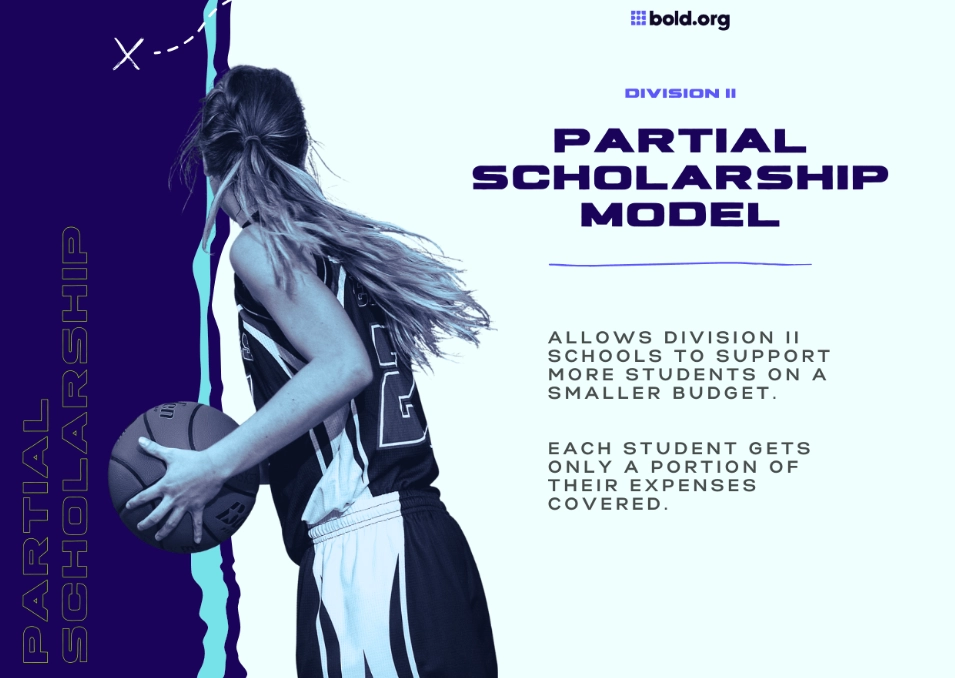
The Bottom Line: Don't look at the percentage in a vacuum. Ask the coach: "Based on my academic profile, what do you estimate my total financial package would look like if I combined this athletic offer with the university's merit aid?" A good coach will connect you with the financial aid office to get that estimate.
The D2 Recruiting Timeline: A Step-by-Step Guide
D2 recruiting happens later than D1. If D1 is a junior-year frenzy, D2 is a senior-year negotiation. Missing this timeline is a top reason athletes get overlooked.
Junior Year: The Foundation
This is your research and exposure year. Create a realistic list of 15-20 D2 schools that match your athletic level, academic interests, and geographic preference. Register with the NCAA Eligibility Center. Make a highlight video. Start reaching out to coaches with a short, professional email—your stats, GPA, link to video, and why you're interested in their program. Attend camps or showcases where D2 coaches are confirmed to be attending.
Summer Before Senior Year: The Evaluation Period
Coaches are actively watching club/travel ball or summer circuits. Follow up with the coaches you contacted. If you have new game footage or improved stats, send an update. This is when coaches start forming their "want" list for the upcoming senior class.
 Senior Year (Fall): The Offer Window
This is prime time. After coaches see their current roster in pre-season, they know exactly what gaps they need to fill. Official visits happen. Verbal offers are made. This period from September to November is intense. Be prepared to have conversations about money and roster spots.
Senior Year (Spring): The Final Puzzle Pieces
Some spots remain. Maybe a top recruit chose a D1 school, freeing up scholarship money. Coaches are filling their final roster spots. If you're still uncommitted, persistent, targeted communication is key. The National Signing Day for most D2 sports is in April.
The Academic Game: Meeting NCAA Eligibility
No GPA, no play. It's that simple. The NCAA D2 initial-eligibility standards are your ticket to the game. As of the latest rules, you need:
- Core Course GPA of 2.2 or higher in 16 NCAA-approved core classes.
- An SAT/ACT score that matches your GPA on the NCAA Sliding Scale. A 2.5 GPA requires a 900 SAT, while a 3.0 GPA only needs a 720 SAT.
This is non-negotiable. I've seen phenomenal athletes miss their entire freshman season because they didn't pass the required number of core English or math classes. Meet with your high school counselor now to audit your transcript against the NCAA core course list.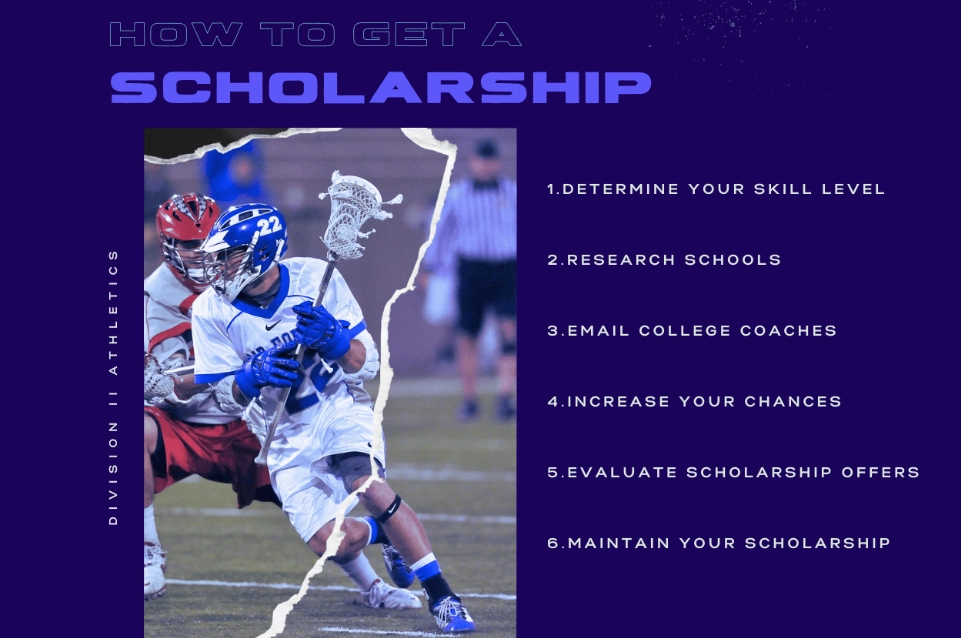
How to Get Noticed and Contact Coaches
Waiting for a coach to find you is a losing strategy. You have to be the driver.
Your first email should be like a cover letter: brief, professional, and packed with value. Subject line: "[Your Graduation Year] [Your Position] - [Your High School/Club Team]"
Body: Introduce yourself, state your interest in their program (mention something specific you like), list your key stats and GPA, and link to your online recruiting profile or highlight video. Attach your schedule. End with a call to action: "I will follow up next week." And then do it.
Use the school's athletic website to find the coach's direct email. A generic "[email protected]" address often goes to a black hole.
Common Mistakes Athletes Make (And How to Avoid Them)
After watching hundreds of families go through this, patterns emerge.
Mistake 1: Chasing the D1 label. They turn down a 70% scholarship and a starting spot at a great D2 school for a 10% "walk-on opportunity" at a low-tier D1 program where they'll never see the field. Choose the place where you'll play and be valued.
Mistake 2: Not doing the financial math. They see "25% scholarship" and think it's not enough. They don't combine it with academic money. They don't calculate the net price. Always, always get the full financial picture.
Mistake 3: Ghosting coaches. You email 50 coaches, get 5 responses, visit 2 schools, and commit to one. You must email the other 48 to say, "Thank you for your time, I've committed elsewhere." Burning bridges in the small world of college coaching is a terrible idea.
A Real Scenario: Mapping a Plan for "Jordan"
Let's make this concrete. Meet Jordan, a high school junior soccer midfielder with a 3.4 GPA and a 1050 SAT.
Step 1 (Now): Jordan registers with the NCAA Eligibility Center and confirms her 16 core courses are on track.
Step 2 (This Spring): She creates a list: 5 "reach" D2 programs, 10 "target" schools that match her stats, and 5 "safety" schools. She makes a 3-minute highlight video.
Step 3 (May-June): She sends her introductory email to the assistant coaches at all 20 schools. She includes her club tournament schedule.
Step 4 (Summer): She follows up with the 8 coaches who replied. She attends one ID camp at a top target school.
Step 5 (September): Two coaches invite her for official visits. School A offers a 40% scholarship. School B offers 25% but has a stronger academic merit award.
Step 6 (October): Jordan gets financial aid estimates from both schools. School A's net price is $18,000. School B's is $15,500. She prefers School B's campus and commits.
This isn't magic. It's a systematic process.
Your Questions, Answered
 How do I respond when a D2 coach asks, "What other schools are you talking to?"
Reader Comments