Let's cut to the chase. University accreditation standards are the single most important factor you're probably not checking when choosing a school. They're not just bureaucratic stamps of approval; they're the difference between a degree that opens doors and one that's a very expensive piece of paper. I've seen too many students, years into a program, discover their credits won't transfer or their professional license is out of reach because they overlooked this. This guide will walk you through exactly what accreditation is, why it matters to you, and how to verify it in under five minutes.
Your Quick Guide to Accreditation
What Is University Accreditation, Really?
Think of accreditation as a school's quality control audit. It's a voluntary process where an independent, non-governmental agency evaluates a college or university against a set of agreed-upon standards. These standards cover everything from faculty qualifications and library resources to student support services and financial stability.
The key is understanding the two main types of accreditation in the U.S., because they are not created equal.
Regional vs. National Accreditation: The Critical Divide
This is where most confusion starts. Here’s the breakdown you won't find in most school pamphlets.
>| Feature | Regional Accreditation | National Accreditation |
|---|---|---|
| Scope & Prestige | Considered the "gold standard." Granted to non-profit, academically-oriented institutions (public and private). | Often granted to for-profit, career-focused, faith-based, or vocational schools. |
| Governing Bodies | Six agencies like the Higher Learning Commission (HLC) or the Southern Association of Colleges and Schools (SACS). | Agencies like the Distance Education Accrediting Commission (DEAC) or the Accrediting Council for Independent Colleges and Schools (ACICS). |
| Credit Transfer | Credits and degrees are widely accepted by other regionally accredited schools. This is huge for transfers or grad school. | Credit transfer to a regionally accredited school is often difficult, if not impossible. It's frequently a one-way street. |
| Financial Aid | Eligible for all federal and state financial aid programs. | Eligible for federal aid, but the school itself must be approved by the U.S. Department of Education. |
My blunt advice? If your goal includes any possibility of transferring, attending graduate school, or working for an employer that scrutinizes credentials, prioritize regionally accredited institutions. The national route can be valid for specific, immediate career training (think certain tech certifications), but it closes far more doors than it opens.
Why Accreditation Standards Matter to You (Beyond the Brochure)
Schools talk about "rigorous standards," but what does that mean for your daily life and future?
Your Financial Aid Depends on It. Full stop. To disburse federal student loans and grants, the government requires you to attend an institution accredited by an agency recognized by the U.S. Department of Education or the Council for Higher Education Accreditation (CHEA). No recognized accreditation, no federal aid. This is non-negotiable.
Your Credits Need to Move With You. Life happens. You might move, change majors, or find a better program. If your school is regionally accredited, your hard-earned credits have a strong chance of being accepted elsewhere. If it's nationally accredited, you're often looking at starting from scratch. I once advised a student who lost two full years of coursework this way. The emotional and financial cost was devastating.
Your Graduate School Plans Hinge on It. Most reputable graduate programs (think law, medicine, MBA) require your bachelor's degree to be from a regionally accredited institution. They use this as a baseline filter for applicant quality.
Your Employer Might Check. While not all do, many government agencies, public school systems, and large corporations have policies requiring degrees from accredited universities, specifically regional ones, for hiring or promotion. It's a risk you don't need to take.
It's Your Quality Assurance. The process ensures there's a competent faculty, adequate resources, and a curriculum that meets academic norms. An unaccredited school has no external check on its promises.
How to Check a School's Accreditation Status (The Right Way)
Don't trust the "Accredited!" badge on a school's homepage. That's marketing. You need to verify independently. Here's your action plan.
Step 1: Go to the Official Source. Never use a third-party "accreditation checker" site. Go directly to the database maintained by the U.S. Department of Education's Office of Postsecondary Education. It's called the Database of Accredited Postsecondary Institutions and Programs (DAPIP). This is the authoritative list.
Step 2: Search and Scrutinize. Look up your school. The listing will show you the accrediting agency and the accreditation status. The status is crucial. It should say "Accredited." Beware of terms like "Pre-accredited," "Candidate for Accreditation," or "Probation." These mean the school is not fully accredited, and your risks are higher.
Step 3: Vet the Accreditor Itself. Is the accreditor recognized by either the U.S. Department of Education or CHEA? Some "accreditation mills" exist that offer worthless accreditation for a fee. Cross-check the accreditor's name on the CHEA website or the ED's list.
Step 4: For Professional Programs, Check Specialized Accreditation. If you're studying nursing, engineering, business, or law, your program may also need specialized accreditation (e.g., ABET for engineering, AACSB for business). This is in addition to institutional accreditation. Check the relevant professional association's website.
Common Mistakes Students Make With Accreditation
After a decade in academic advising, I see the same errors repeatedly.
Mistake 1: Assuming "Accredited" Means "Regionally Accredited." Schools with only national accreditation will proudly display "Accredited" on their site, knowing most students won't dig deeper. You must identify the type.
Mistake 2: Prioritizing Cost Over Accreditation. An unaccredited or nationally accredited school might be cheaper upfront. But if you can't transfer credits or your degree isn't recognized for a promotion, the long-term cost is infinitely higher.
Mistake 3: Not Checking During the Search Process. Do this before you fall in love with a campus or program. Make it the first filter in your college search, not an afterthought.
Mistake 4: Confusing State Licensing with Accreditation. A school may be licensed to operate in a state, but that is not the same as academic accreditation. Licensing is a basic legal permission; accreditation is a peer-reviewed quality assessment.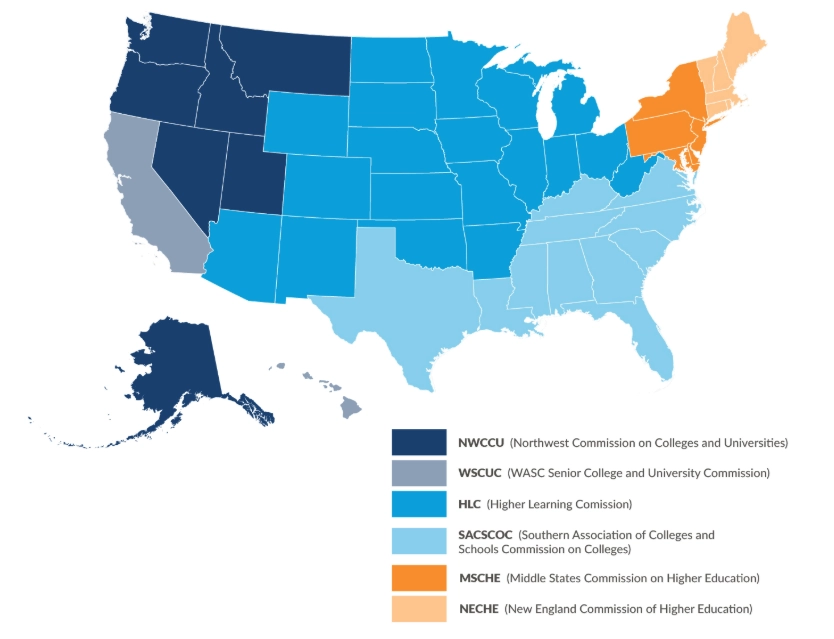
Your Accreditation Questions, Answered
 What's the difference between "programmatic" and "institutional" accreditation?
 Look, navigating higher education is complex enough without hidden pitfalls. Treat university accreditation standards as your non-negotiable foundation. Spend that five minutes on the DAPIP database. It's the simplest, most powerful due diligence you can do for your educational investment and your future. Everything else—the campus tours, the scholarship essays, the degree—builds on that foundation. Make sure it's solid.
Reader Comments